The CEO health conversation circles the same topics — testosterone, VO2 max, sleep optimization, supplements, peptides. What almost never comes up is the variable that, in 15 years of working with business leaders at Stark, Todd Vande Hei says is one of the strongest predictors of how well someone ages: whether they have real social connection. Not a packed calendar. Not a full inbox. Real connection. This is not a soft topic. The biology is hard, the data is unambiguous, and the fix is more specific than "go make friends."
The Biology of Loneliness: It's Not a Mental Health Issue, It's a Physical One
A 2025 meta-analysis published in BMC Public Health, drawing on data from over 5 million participants across multiple countries, found that social isolation and loneliness are associated with a 17% increased risk of cardiovascular disease. That's not a rounding error — it's a statistically robust, clinically meaningful increase in your risk of heart disease driven by a social variable most health conversations ignore entirely. Loneliness chronically elevates cortisol. In short bursts, cortisol is useful. Chronically elevated, it stresses immune function, promotes systemic inflammation, disrupts sleep architecture, impairs glucose metabolism, and breaks down lean muscle mass. Every system you're optimizing in the gym or at your Doctor's office is downstream from cortisol. Chronic loneliness is undermining all of it.
Your Nervous System Reads Isolation as a Threat — with Measurable Consequences
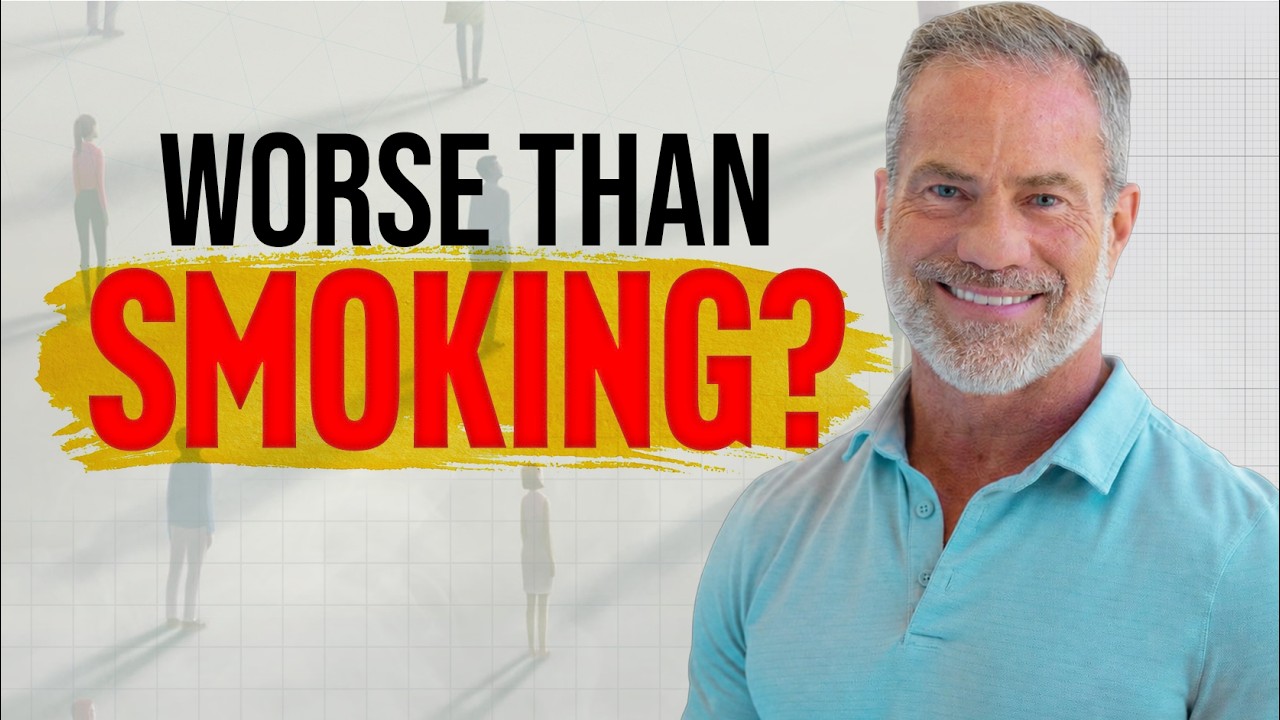
Loneliness also impairs parasympathetic function — your autonomic nervous system's rest-and-repair mode, which drives HRV and enables recovery. When your body perceives chronic social threat (and that's exactly how the nervous system interprets prolonged isolation — as threat), it keeps you in low-grade sympathetic activation around the clock. Your HRV drops. Your recovery suffers. Your sleep quality declines. Inflammatory markers trend upward. The Surgeon General of the United States declared loneliness a public health epidemic. In a 2023 advisory, Vivek Murthy compared the health impact of chronic loneliness to smoking 15 cigarettes per day. And yet it does not come up in CEO health conversations. We talk about peptides. We do not talk about whether the person taking the peptides has someone to have dinner with.
Why Executive Loneliness Is a Distinct Problem
This isn't the loneliness of sitting alone in a dark room. It's the loneliness of the executive who has a packed calendar, back-to-back meetings, a team that depends on them, and who — when you actually dig in — hasn't had an honest conversation in weeks. Cal Newport at Georgetown University puts it precisely: our social brains interpret the sacrifice of time and attention on behalf of another person as the signal that a connection is real. When we optimize the friction out of communication — texts, Slack threads, Zoom calls with cameras off, voice memos — we paradoxically feel less connected, not more. The higher you get in an organization, the more your relationships become transactional. Everyone in your orbit needs something from you. Over time, it becomes genuinely difficult to find a relationship that doesn't have a transaction at the center of it. That is the CEO version of loneliness: not the absence of people, but the absence of real connection.
What the Stark Data Actually Shows About Who Ages Well
In 15 years of working almost exclusively with business leaders at Stark, a pattern has become impossible to ignore. The people who age the best — who maintain body composition, cognitive sharpness, energy levels, and emotional resilience — are not always the ones who train the hardest or eat most precisely. They're almost always the ones who stay genuinely socially connected. Real relationships. Real conversations. Physical presence at the dinner table. Investment in relationships that don't have a transaction at the center. And the people whose biomarkers trend in the wrong direction despite doing everything else right are often the most quietly, profoundly isolated — in a life that looks completely full from the outside.
Three Actionable Interventions That Actually Work
Generic advice to "socialize more" doesn't move the needle. Three specific interventions that have worked for Stark students: First, identify one relationship that used to be real and has become transactional. Schedule one unstructured, agenda-free hour with that person — no work discussion, no problem-solving. Just presence. Second, find a community that has nothing to do with your professional identity. A place where you're not the CEO, not the expert, not the resource — just a participant. Third, deliberately add friction to your digital communication. Replace a text with a phone call. Replace a Zoom with an in-person meeting when it's feasible. Your nervous system registers real presence as safety; it does not register efficient digital communication that way, regardless of how convenient it feels.
Key Takeaways
- Social isolation and loneliness are associated with a 17% increased risk of cardiovascular disease — a statistically robust finding from a 5-million-participant meta-analysis.
- Chronic loneliness elevates cortisol, tanks HRV, disrupts sleep, promotes inflammation, and impairs glucose metabolism — undermining every system you're trying to optimize.
- The CEO version of loneliness isn't obvious isolation — it's being surrounded by people while having no real connection, because every relationship has become transactional.
- When we optimize the friction out of communication (texts, Slack, Zoom), we paradoxically feel less connected — because the nervous system requires real presence to register safety.
- The Stark students who age best aren't always the ones who train hardest. They're almost always the ones who stay genuinely socially connected.
Ready to build a body that performs?
Stark looks at the whole picture — labs, body composition, recovery markers, and the lifestyle variables that actually predict long-term health. Newport Beach and Tustin/Irvine.
Schedule a ConsultMedical Disclaimer: This content is for educational and informational purposes only and is not intended as medical advice. Always consult with a qualified healthcare professional before making changes to your health protocols.